
Industries we build for.
The standard of care does not change by industry. The proof points do.
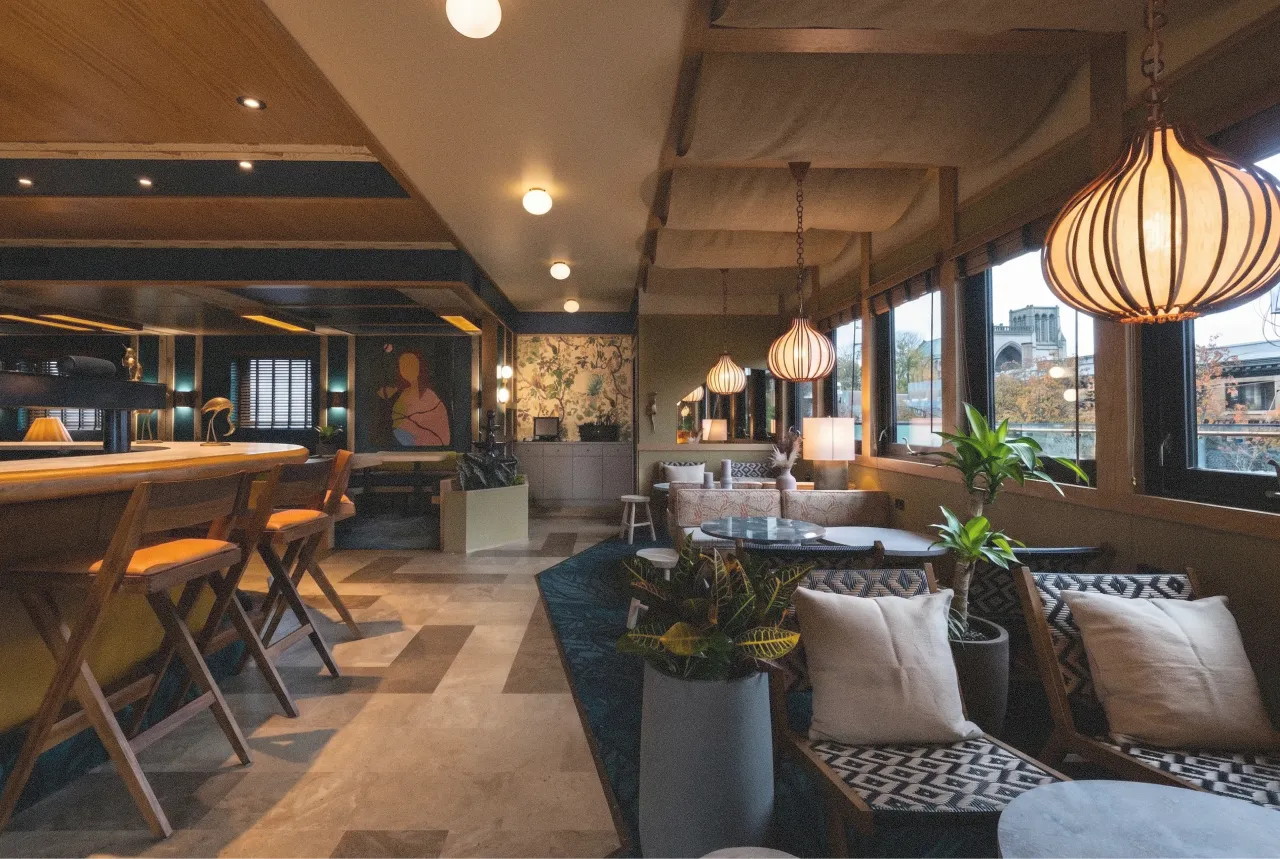
EDDA serves ten industries across Greater Victoria: seven end-user verticals (hospitality, clinical and healthcare, office and workplace, retail, education, multi-family residential, and mixed-use) and three partner industries (property management, strata, and commercial realtors). Each industry gets the same disciplined, one-team, one-contract delivery, with trade depth and proof points specific to that building type.
Industries.
Industries are how EDDA goes to market. Services are how EDDA delivers. The same seven services run across every industry on this list. What changes from one industry to the next is the trade depth, the regulatory path, and the proof: the projects that show we have built this kind of space before.
Hospitality anchors the portfolio. It is the work the firm was built on, and the discipline learned there, tight schedules, demanding finishes, occupied neighbours, dates that do not move, now carries into every other industry we serve.
The same discipline runs through every project, whether it is a 1,500 sq ft cafe or a 30,000 sq ft mixed-use building.
The work the firm was built on. Kitchen ventilation, FOH and BOH workflow, FF&E coordination, and health-authority timelines, all carried by the same team that designs and builds the space.
Condos, purpose-built rentals, townhomes, and infill, built with the envelope discipline the coastal climate demands and the schedule discipline that financing draws demand. Both decide whether the project meets its pro forma.
Commercial at grade with residential above, the most coordination-intensive building type we deliver. Separate occupancies, egress, and leasing strategies, held together by one integrated team and senior on-site leadership.
Offices for professional services, creative, and tech firms, built around how the firm works in a hybrid era. Acoustics, lighting, and brand expression are treated as construction-level decisions, not finishes added at the end.
Storefronts, showrooms, and brand-experience spaces that have to work the moment a shopper looks in. Fixtures coordination, lighting, and signage built into the scope and sequenced to the retail season.
Medical, dental, integrative, and wellness practices, planned around clinical workflow, infection control, and specialty equipment. Building Biology is available as a layered specialty where occupant health is central to the operation.
Schools, daycares, and learning environments, delivered within the summer window and built for heavy daily use. Indoor environmental quality is a default discipline, with Building Biology available where the school wants the higher standard.
Responsive TI pricing, envelope and common area work, capital improvements, and emergency repairs, delivered on occupied buildings with the tenant communications that make the property manager look good to owners and tenants.
Capital projects for strata corporations, from envelope retrofits and roofing to depreciation-report implementation. Building science discipline for the work, and council communications discipline for the multi-owner context.
A builder brokers can recommend without thinking twice: fast TI budgets, honest feasibility, and clean delivery that protects the broker's relationship with landlord and tenant alike.
Custom homes, whole-home renovations, additions, laneway and garden suites, and heritage residential work, delivered by one accountable team under one contract. Envelope, mechanical, and material decisions made for the decades the family will live there, not for opening day.

From design to build, working with the team was very easy and actually enjoyable. This is our second project with them now and both have finished better than we imagined. Would recommend working with Edda.
Top Chef Canada 2019 Winner.
Start from the service instead.
Every industry is delivered through the same seven services. If you would rather start from how the work gets done, design-build, construction management, tenant improvements, renovations, exteriors, ground-up, or Building Biology, our services pages map each one back to the industries that commission it most.
FAQs.
EDDA builds for hospitality, clinical and healthcare, office and workplace, retail, education, multi-family residential, and mixed-use, and partners with property management firms, strata corporations, and commercial realtors across Greater Victoria.
Hospitality. Most of EDDA's portfolio is hospitality, including restaurants, cafes, bars, and boutique hotels, and the firm's construction discipline was developed there.
Yes. EDDA works as an ongoing construction partner for property management firms and strata corporations, handling tenant improvements, envelope and common area work, capital projects, and depreciation-report implementation.
Likely yes. The ten industries reflect where EDDA's proof is deepest, but the same one-team, one-contract delivery applies to most commercial and residential building types. Bring us your scope and we will tell you whether it is a fit.
The standard of care and the senior leadership stay the same across every industry. What changes is the trade depth and the proof points specific to each building type.