
Our Process
One team, one contract, from the first conversation to the final inspection.
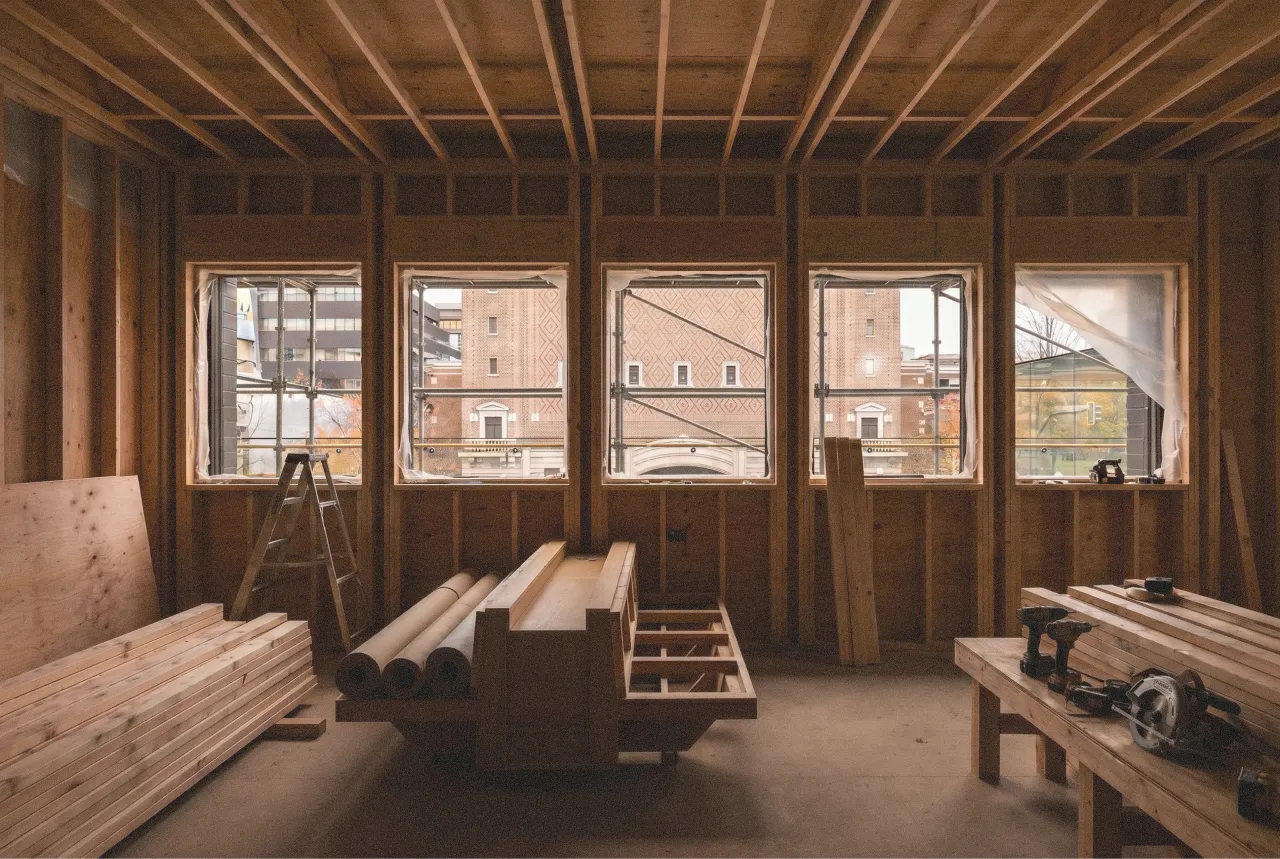
The steps.
Most construction problems happen at the handoff. The architect finishes drawings, the contractor inherits them, and the gaps between intent and execution become change orders, schedule slips, and finger-pointing. EDDA removes the handoff by putting design and construction under one contract. Here is what that looks like, step by step.
[01]
We start with a conversation about what the building needs to do. Not what it should look like first, what it needs to do. How the business operates, how people move through the space, what wears out fastest, what the budget and the timeline really are. For ground-up and renovation work, this is also where we look at the site, the constraints, and the feasibility.
[02]
We translate the brief into a concept: layout, massing, the big moves. You see options early, while they are still cheap to change. Preliminary budget bracketing happens here, so the numbers are part of the conversation from the start, not a surprise at the end.
[03]
The concept develops into a detailed design, and pricing develops alongside it. This is the core advantage of design-build: the people pricing the work are the people who will do the work, so the budget is real before the first cut is made. We work open-book or fixed-price, whichever protects your investment best for the project.
[04]
We coordinate permits with the relevant municipality (Victoria, Saanich, Oak Bay, Esquimalt, Langford, and the others each run their own process), line up the trades, lock the schedule, and sequence procurement around the items that always run late: permits, glazing, custom millwork, and specialty equipment.
[05]
We build. Senior leadership is on site for every project, regardless of size. You work with the same team you have had since discovery. On occupied buildings, we run the phasing, dust and noise protocols, and tenant communications that keep the building operating while the work gets done. You get monthly reporting that reconciles to the contract value and the schedule.
[06]
We finish to the date that matters, your lease commencement, your opening night, the start of the school year, and we hand over a building that matches what was promised at the start. Substantial-completion documentation, warranties, and the records you will want years from now all come with it.
After handover.
For repeat clients and partners, the relationship continues. Property managers, strata councils, and operators have a builder they can call when something needs attention down the road.
Why one team, one contract matters.
Single-point accountability.
One team owns the outcome. There is no gap between the people who designed it and the people who built it, because they are the same people.
Price certainty earlier.
Pricing develops with the design, so the budget is real before construction starts. Change orders, the largest source of cost growth in traditional projects, are dramatically reduced.
Faster schedules.
Design and construction overlap instead of running in sequence, so the project moves faster without cutting corners.
Built to last.
Because the team that designs the building has to build it, the decisions are made for how the building will perform over the next ten and twenty years, not just for opening day.
FAQs.
In design-build, one firm holds both the design and construction contracts and carries the project through discovery, concept design, detailed design with open pricing, permitting, construction, and closeout. The same team designs and builds the project, which removes the handoff between architect and contractor.
In design-bid-build, the client hires an architect, finishes the drawings, then tenders the project to contractors, creating a handoff between design and construction. In design-build, one team carries the project from concept through construction, so there is no handoff.
Pricing develops alongside the design. Preliminary budget bracketing happens at concept, and the budget is reconciled to the detailed design before construction starts, so it is real before the first cut is made.
Senior EDDA leadership is on site for every project, regardless of size, along with the project lead who has been involved since discovery.
Yes. Most of EDDA's renovation and tenant-improvement work happens on occupied buildings, using phasing, dust and noise protocols, and direct tenant communication to keep the building operating.
Yes. EDDA coordinates permits with the relevant Greater Victoria municipality as part of the process, and sequences the schedule around permit timelines.